



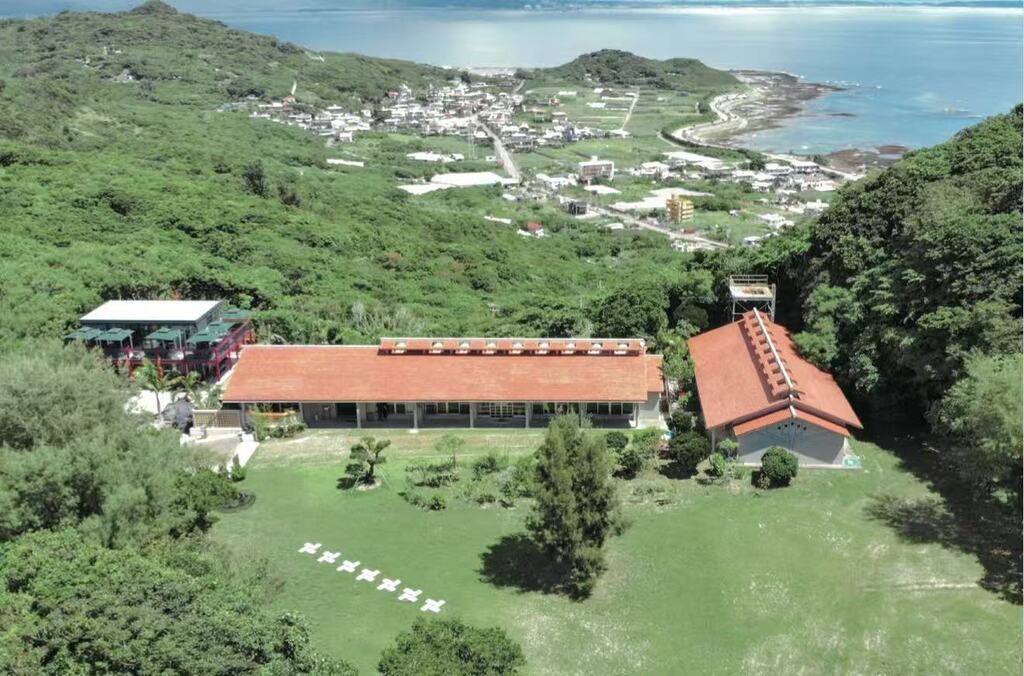

On a forested ridge in southern Okinawa, less than 700 metres from the gates of Sefa-Utaki, the UNESCO-listed sanctuary that served as the holiest site of the Ryūkyū Kingdom for nearly five centuries, a remarkable private residence will open to overnight guests for the first time.
Nanjo Art Villa is the new private residence of Nanjo Art Museum, Japan’s southernmost institution of contemporary art, which opened in 2022. The villa will welcome international guests from June 2026.
Neither hotel nor guesthouse, Nanjo Art Villa is a private art residence attached to a working museum. It accommodates one party of up to eight guests at a time and sits within 5,000 square metres of lawn, bordered on three sides by primordial forest. To the north, the villa faces the open Pacific; to the east rises the sacred grove of Sefa-Utaki.
A Response to the Age of the Image
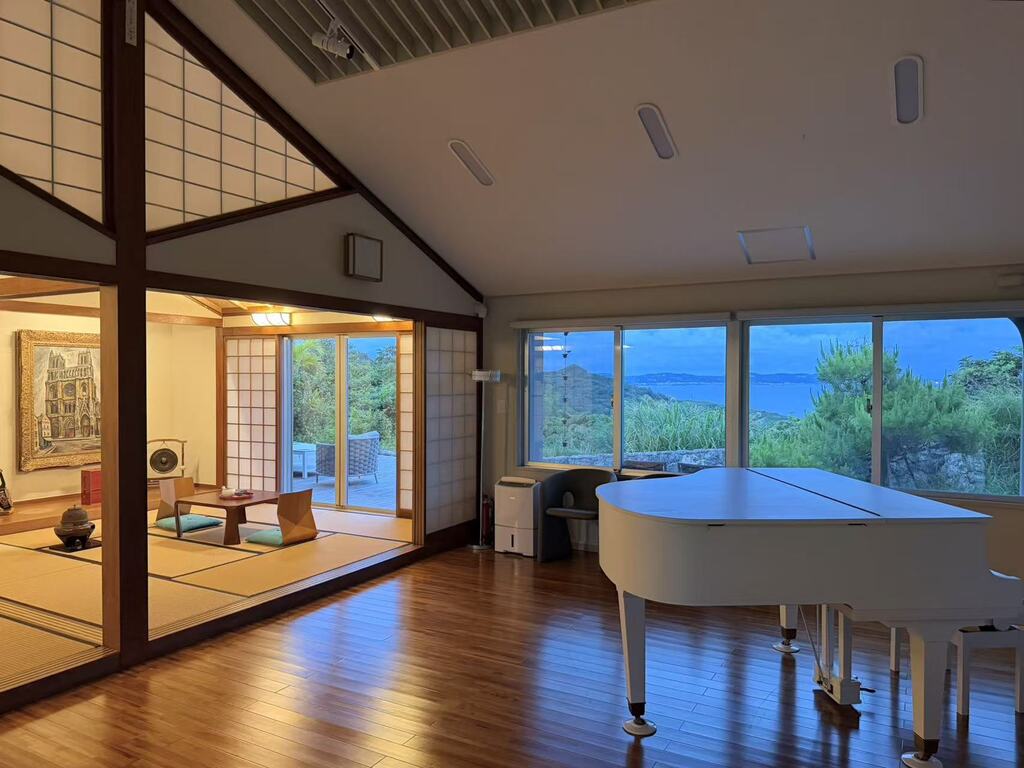
The decision to open the villa reflects an evolution in Nanjo Art Museum’s understanding of its role.
“In an era when images are generated and circulated by the billions every day, looking at a painting on a museum wall for the few seconds most visitors spend in front of one is no longer enough,” says the museum’s curatorial team.
Nanjo Art Villa is the museum’s first concrete response to that question: an attempt to extend art from something one views into something one inhabits.
Eighteen Masters of Modern Japanese Painting
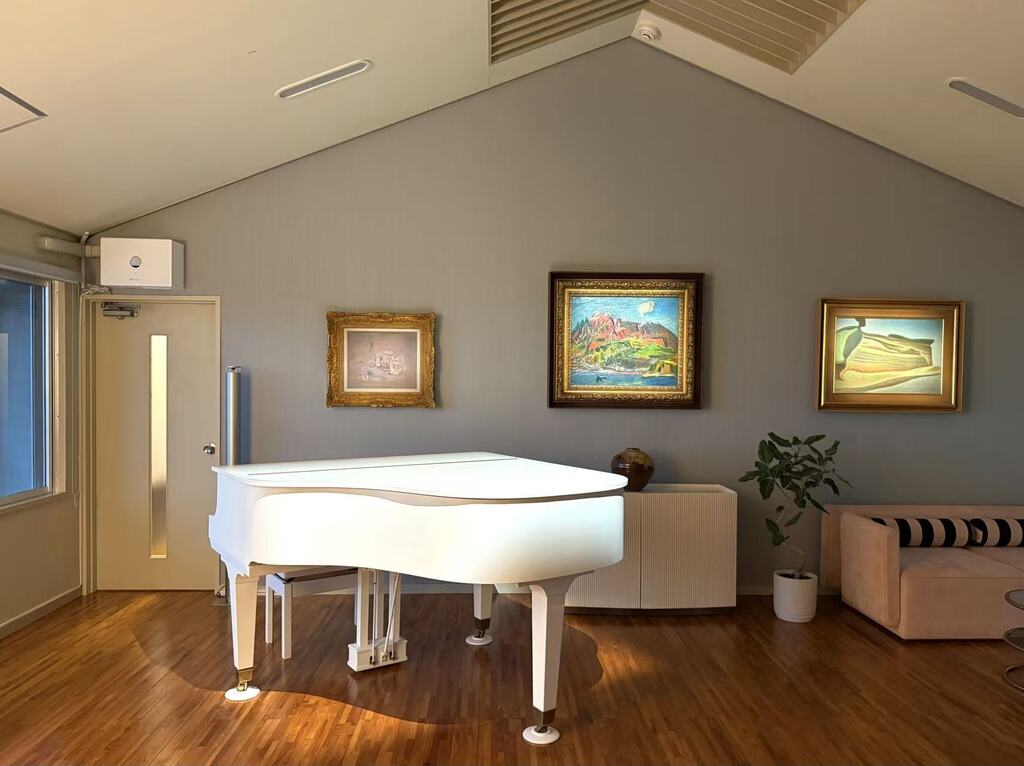
Inside the villa, guests live among original works by eighteen recipients of Japan’s Order of Culture, or Bunka Kunsho, the highest cultural honour conferred by the Japanese state. The artists are masters of Western-style oil painting, known as yoga, who helped shape Japanese modernism throughout the twentieth century.
They include Fujishima Takeji, Okada Saburosuke, Wada Eisaku, Umehara Ryūzaburō, Yasui Sōtarō, Sakamoto Hanjirō, Hayashi Takeshi, Ogisu Takanori and Nakagawa Kazumasa. Their works are represented in major collections including the National Museum of Modern Art, Tokyo, the Artizon Museum, formerly Bridgestone, and the Pola Museum of Art.
Each painting at Nanjo Art Villa has been reframed to exacting museum specifications, protected behind Optium anti-reflective acrylic of the kind used by institutions such as the Louvre and the Metropolitan Museum of Art, and lit with museum-grade CRI 95+ adjustable spotlights.
The result is unlike a conventional domestic interior. After dark, the paintings appear to float in the quiet of the southern landscape, offering guests an unusually intimate encounter with Japanese modern painting.
A House with Two Histories
The villa itself carries two layered histories.
The building was originally Nishida Gakuin, a finishing school founded in the 1990s by Okinawan cultural figures Nishida Tsuyoshi and Nishida Yaeko. Mrs Nishida is a recognised inheritor of Ryukyu royal court cuisine, particularly the Matsuyama Goten lineage. For twenty-three years, Nishida Gakuin trained generations of Japanese women in protocol, tea and the aesthetics of formal hospitality, following a tradition inspired by Switzerland’s Institut Villa Pierrefeu in Glion-Montreux.
The school closed in 2018, and the Nishida family entrusted the building to Nanjo Art Museum the following year.
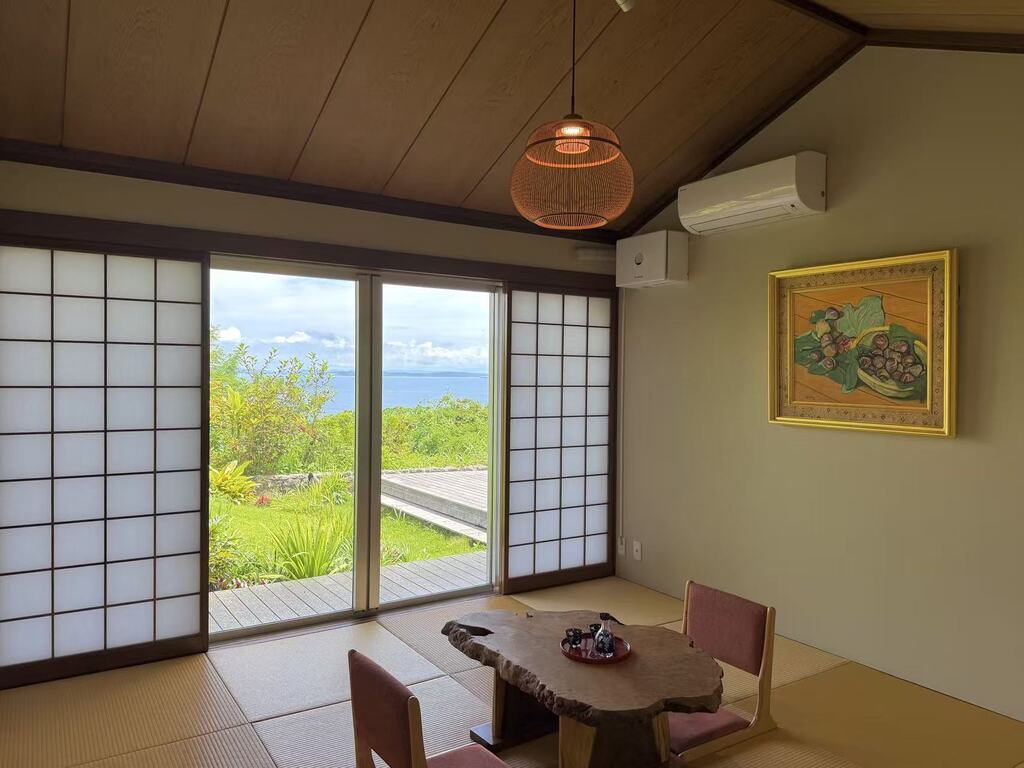
Designed in 1995 by celebrated Okinawan architect Akamine Kazuo, the structure frames the Pacific through long horizontal openings while drawing the surrounding greenery deep into the interior.
Guests sleep on traditional Japanese tatami floors with futon bedding, creating an experience distinct from the standard hotel stay and completing the villa’s immersion in Japanese aesthetic life.
Sacred Geography and Three Great Golf Courses
What distinguishes Nanjo Art Villa from other private residences in Japan is its extraordinary setting.
The villa sits on the ridge between Sefa-Utaki, the holiest sanctuary of Ryukyuan religion, and Azama Port, where a fifteen-minute ferry crosses to Kudaka Island. According to Ryukyuan creation mythology, Kudaka is the island where the goddess Amamikyo first set foot on earth.
The surrounding area offers access to some of Okinawa’s most significant cultural and historical sites:
Sashiki Castle, a 20-minute drive east, is the birthplace of Shō Hashi, who unified the three kingdoms of Ryukyu in 1429. The year 2029 will mark the 600th anniversary of that unification.
Gyokusendo Cave and Gangala Valley, 30 minutes west, are associated with evidence of human habitation stretching back some 18,000 years.
The Cornerstone of Peace, 40 minutes south, commemorates the dead of the Battle of Okinawa, with more than 240,000 names inscribed in stone arcs overlooking the sea.
For golfers, the villa also occupies a rare position. Three of Okinawa’s finest courses lie within a half-hour drive: the historic Shurei Country Club, with elevated greens overlooking the Pacific; Ryukyu Golf Club, whose championship layouts host professional tournaments; and Southern Links Golf Club, known for its dramatic cliffside par-three over the open sea.
Few private residences in Japan sit at the centre of such a dense cultural and sporting landscape. Fewer still do so within the grounds of a working art museum.
Practical Information
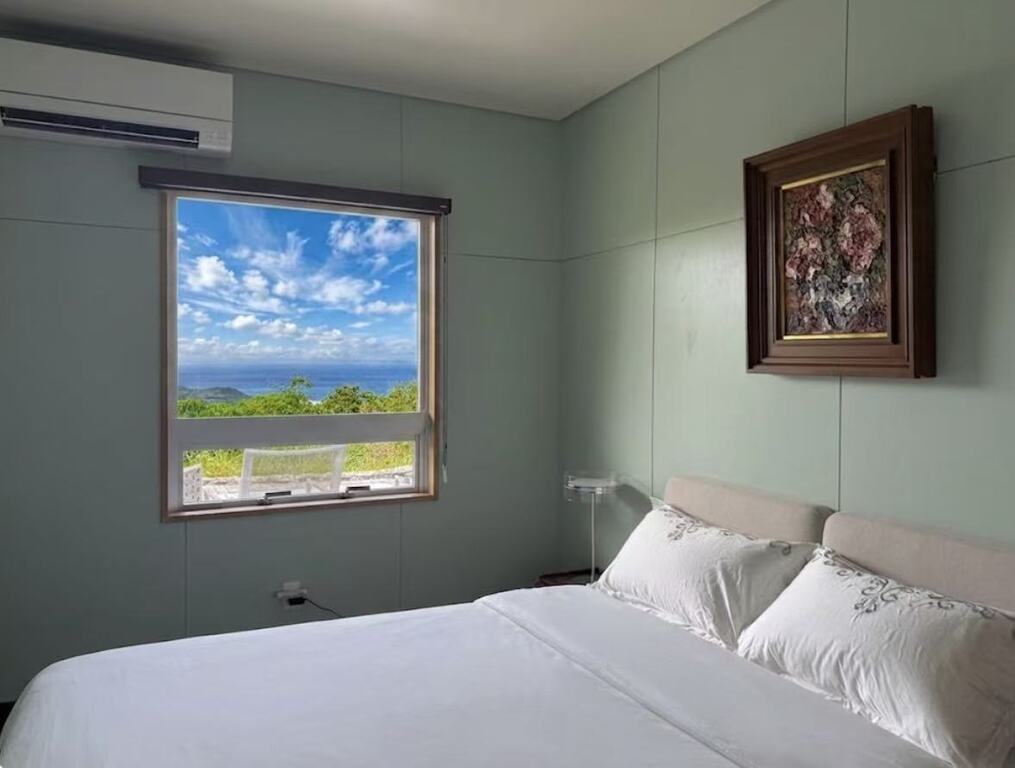
Nanjo Art Villa accepts one party of up to eight guests at a time. Children under twelve cannot be accommodated.
Each stay includes a private viewing of Nanjo Art Museum’s permanent collection, which features works by Yayoi Kusama, Park Seo-bo, Zhang Xiaogang and Zeng Fanzhi, as well as a curator-led tour of the villa’s eighteen-painter residence collection.
Private chef dining and traditional Ryukyuan performing arts evenings are available on request with at least one week’s advance notice.
Nanjo Art Villa
〒901-1502 865 Azama, Chinen, Nanjo City, Okinawa, Japan
TEL: +81-98-975-7616
Email: info(at)nanjoartvilla.com
Website: https://nanjoartvilla.com/